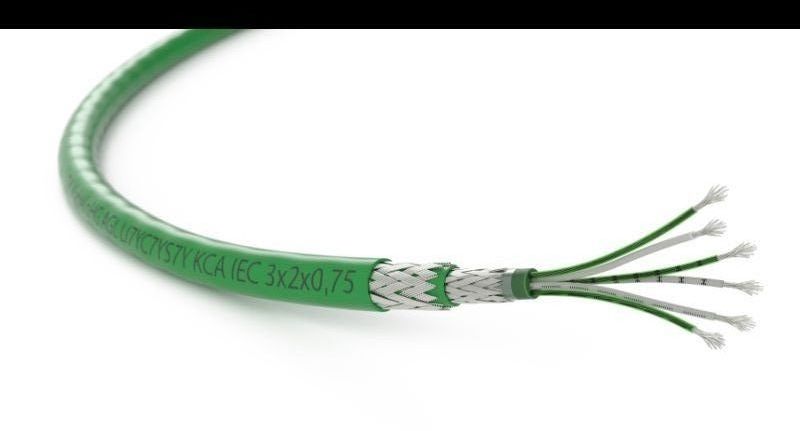
Precision to the Measuring Point: Thermocouple and Extension Cables by T.K. Kabel oHG
In industrial temperature measurement, choosing the right cable is critical for process reliability. T.K. Kabel oHG offers a wide range of insulations and core combinations to provide the optimum solution for every ambient temperature and mechanical load.
Thermocouple Cables vs. Extension Cables: What are the Advantages?
Many users face the decision: original material or substitute material? Here is a direct comparison for your planning:
Advantages of Thermocouple Cables (Code letter "X", e.g., NX, KX, EX, JX)
-
Maximum Precision: Since they are made of the identical alloys as the thermocouple itself, no interference thermal voltages occur at the junction points (plugs/terminals).
-
Higher Temperature Resistance: The cable itself can often be exposed to higher ambient temperatures without distorting the measured value.
-
Process Reliability: Ideal for critical applications where every deviation in the tenth-of-a-degree range must be avoided.
Advantages of Extension Cables (Code letter "C" or "A", e.g., KCA)
-
Cost Efficiency: They use lower-cost substitute materials (e.g., special copper alloys) that provide the same thermal voltage within a restricted temperature range.
-
Economic Viability: Especially for long installation distances, they significantly reduce material costs.
Material Makes the Difference: From PVC to Fiberglass
Depending on the location, the requirements for insulation vary. We offer five core materials for your thermocouple and extension cables:
-
PVC: The economical standard solution for simple applications in the temperature range from -25°C to +105°C.
-
ETFE: Our specialist for mechanical stress (up to +155°C). It is extremely abrasion-resistant, tough, and chemically resistant – ideal for aerospace and automotive engineering.
-
FEP: The all-rounder for demanding environments (up to +205°C). FEP offers excellent chemical resistance and is frequently used in process technology.
-
PFA: When things get even hotter, we use PFA (up to +260°C). It combines maximum temperature resistance with almost universal chemical inertness.
-
Fiberglass: For extreme heat applications up to +400°C (higher for short periods). Fiberglass is the first choice for furnace construction but should only be used in dry environments.
Conclusion: Expertise from T.K. Kabel oHG
Whether you need a robust ETFE cable, heat-resistant FEP/PFA, or classic fiberglass insulation – we provide the right connection for your measurement technology. All our cables comply with international color codes (IEC 60584 or ANSI) to ensure error-free installation.